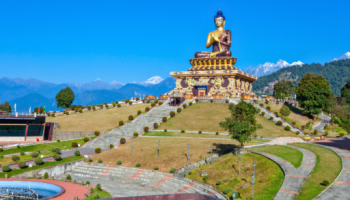
Sikkim Permit Requirements: How to Get Protected Area Permits in 2025
The northeastern Indian state of Sikkim, which is located in the Himalayas, is known for its culture, breathtaking scenery, and sensitive border regions. Because parts of the state border international frontiers, they assume the definition of Restricted or Protected Areas. Access to these areas requires permits, and thus both Indian and foreign travellers need to ensure that they get suitable permissions for unhindered travel.
Also Read: North Sikkim Travel Guide
Why Need Permit?
Certain districts and tourist destinations fall under Protected or Restricted Areas because of their strategic proximity to international borders and ecological sensitivity. These include popular high-altitude zones such as North and East Sikkim — areas like Lachung, Lachen, Yumthang Valley, Tsomgo Lake, and Nathula Pass. Without proper documentation, visitors are not permitted to enter these regions.
Ultimately, these rules balance tourism with national security and environmental conservation.
Most parts of Sikkim require a Restricted Area Permit (RAP) for foreign nationals who wish to visit there. It serves as the entry authorization to parts of the state where foreigners are otherwise not permitted access, such as much of Gangtok, South, West, and parts of North Sikkim up to certain points.
Sikkim Tourism
Issued only to foreign tourists except Bhutanese Citizens).
It is obtained from government offices, foreign missions, or immigration centres.
Mainly valid for 30 days and extendable for another 30 with approval.
Registration with a local police station is required within 24 hours of arrival.
Documentation and form submission are submitted to authorities at Immigration Offices across major metropolitan cities in India (New Delhi, Mumbai, Kolkata) or to the Foreigners Registration Office (FRO) in Gangtok.
2. Protected Area Permit (PAP)
A Protected Area Permit (PAP) is required for both foreign and domestic visitors who wish to visit sensitive border area destinations like North Sikkim (Lachen, Lachung, Yumthang, Thangu) and Tsomgo Lake or Baba Mandir in East Sikkim.
Domestic tourists apply for PAP at identified police check posts located at key entry points like Rangpo or at tourism offices, usually without a tour operator.
Foreign tourists, on the other hand, must apply through a travel agent registered with the Sikkim Tourism Department. Generally, solo foreigners are not allowed to obtain PAPs for several border areas, and group travel is frequently a criterion.
For some high-altitude areas, such as Gurudongmar Lake, extra documentation may be required or different procedures may be needed, with base towns generally requiring intermediate permits for foreign visitors. Sikkim Tourism
Also Read: Tsomgo Lake and Nathula Pass
Documents Required
The procedures for both RAP and PAP are simple but must be correct to avoid long delays:
Valid passport with visa page photocopies.
Passport-size photographs as specified by the authorities.
Completed application forms (found at permit offices or through travel agents).
Either a voter ID or a driver’s license for permit applications.
Passport-sized photographs.
Birth certificate/PAN for minors if necessary. Aadhaar cards are not accepted for these permits.
Always take originals and photocopies to the permit office; differences in names, photos, or expiry dates can lead to rejection.
This applies to foreign nationals arriving in India.
Foreigners can apply for RAP and in some places PAP:
Immigration counters at international airports in India (Delhi, Mumbai, Kolkata, Chennai).
Some Indian embassies and consulates abroad may also have the facility to issue permits in advance.
Permit applications are supposed to be taken care of by tourism offices at Siliguri, Kolkata and Gangtok.
Check posts such as Rangpo and Melli issue permits near state borders.
Sikkim had also been modernizing permit administration, with online and QR-based systems set up to ease the wait.
Generally, RAPs are for 30 days, extendable for another 30 days at FRO offices in Gangtok or other superintendent offices across the state.
Sikkim Tourism
PAPs also have specific validity limits depending on the area and itinerary, while requests for extensions must be made before such extensions expire: this is especially crucial for high-altitude or multi-day tours.
Group Travel for Foreigners
Foreign nationals will most often travel in groups (minimum two persons) to apply for their PAPs if they want to travel to sensitive places such as Yumthang and Thangu Valleys in North Sikkim.
Local Guides
PAP guidelines in most Protected Areas require the services of certified local guides to travel with exclusive visitors. This ensures that rules are being followed and enhanced safety in these remote areas.
Checkpoints verify permits at entry points; police or tourism officers may ask to see your permit before allowing access to private vehicles or protected roads.
Common Misconceptions
Aadhaar does not qualify as a primary document for applications for PAP/RAP. Carry approved ID proofs, such as passports or voter IDs.
Sikkim Tourism
ILP vs PAP: No separate inner line permit is in place for Sikkim, as is the case with several other northeastern states of India, but permits for restricted areas serve a similar purpose.
Outlook Traveller
Travel to sensitive protected areas is usually not allowed for solo foreigners without a registered travel agent and minimum group requirements.
The process of obtaining permits appears to be quite complicated; however, with the right documentation, awareness of local rules, and prior planning, one can turn the travel experience into a streamlined and satisfying one within Sikkim’s breathtaking landscape. With the state slowly adopting more digital ways to encourage permit acquisition, the delicate ecosystems that lie at the heart of Sikkim’s awe-inspiring appeal will continue to be catered to.
At the end, you can also check out our next travel stories: Best Time to Visit Sikkim
Book Now
with Your Trusted
Travel Partner
Travelangles.in!!
Discover Northeast India with ease – well-planned itineraries, trusted cabs, and comfortable stays, all managed by TravelAngles for a worry-free holiday
Your Journey,
Our Care !
From arrival to departure, TravelAngles ensures every detail of your trip is seamless — reliable drivers, handpicked stays, and experiences you’ll remember forever.

Related Tours
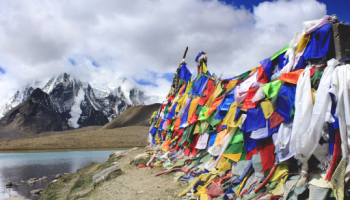
North Sikkim, Lachung, Gurudongmar Lake, and Yumthang Valley 6D/5N

Zuluk Sikkim 6D/5N